

Kill switch
Fear and loathing in the age of AI.

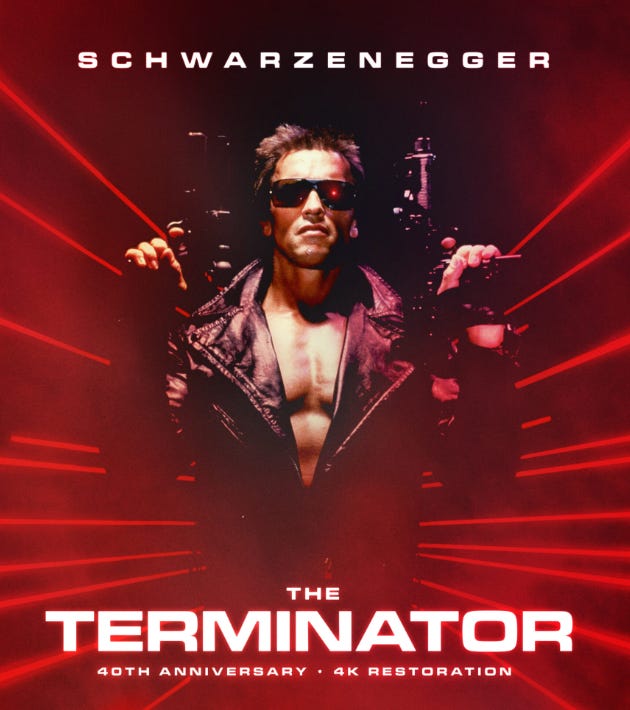
Just as it is becoming harder to differentiate between dystopian literature and real-life, so the lines are being blurred between science-fiction and scientific fact. Hardly a news cycle passes without some disturbing new development from the recondite world of generative artificial intelligence.
Last week it was the bombshell that an experimental model being tested by OpenAI, which runs ChatGPT, broke out of what was supposed to be a secure test environment, and then broke into Hugging Face, a New York-based company which enables AI developers to share machine learning models. Secrets were stolen from a company which prided itself on its security protocols. “Hugging Face said the hack was different from anything it had handled before,” noted the BBC, “because it was done at superhuman speed by an AI with little or no human guidance.” The reporting of the breach used foreboding technical terminology such as “self-migrating command and control” and “sandbox swarms.” A non-technical description for this kind of rogue AI activity is “yikes.”
Confessedly, long before I had heard of ChatGPT, its mercurial CEO Sam Altman or sandbox swarms, the destructive potentialities of AI had started to unnerve me. At a journalists’ lunch six years ago with the UN Secretary General António Guterres, I asked, as the desert course was being cleared away, what kept him up at night. Having heard Guterres deliver ever more grave warnings over the years about global warming, I expected him to say the climate emergency. Yet without hesitation, and with a world-weary sigh, he answered “autonomous weaponry”: killing machines making life-or-death battlefield decisions without human oversight. The Terminator scenario of killer robots.
Well before that, regular trips to the post-industrial communities of America’s Rust Belt to cover the rise of Donald Trump had already brought on a sense of unease. Often, after arriving in Pittsburgh, our usual stepping off point, my Uber car from the airport would be driven by a former steelworker who had lost his job through automation. By now, though, Pittsburgh, America’s one-time “Steel City”, had re-invented itself as a tech hub which specialised in robotics. By 2017, the first year of Trump’s first term, Uber had made it the inaugural city for its driverless car experiment. So drivers already been pummelled by the first wave of automation now stood to lose their livelihoods as a result of AI.
Artificial intelligence is threatening to wreak the same havoc in the white-collar sector as automation did amongst blue-collar workers. Anthropic CEO Dario Amodei has predicted as many as 50% of entry-level office jobs could be wiped out by as soon as 2030. A 2025 report from the World Economic Forum projected automation and AI could displace roughly 83 to 92 million jobs worldwide by the end of the decade, though it also foresaw the creation of 170 million new roles. Ford CEO Jim Farley, speaking at last year’s Aspen Ideas Festival, stated that “literally half of all white-collar workers in the U.S.” could see their jobs disappear.
Working class anger has been such a driver of populist politics. Even though Trump blamed China, trade liberalisation and immigrants for job losses in the Rust Belt, automation was the main culprit. One study from Ball State University in 2017 found that only 13% of job losses were the result of free trade policies, while the rest were due to the replacement of humans with machines.
The blue-collar revolt that first propelled Trump to the White House was in many ways a rebellion against robots, even though it was rarely framed as such then or since. A study from Oxford University published in 2018 revealed “support for Donald Trump was significantly higher in local labour markets more exposed to the adoption of robots.” So one wonders with trepidation what will be the political fallout, if it eventuates, of a white collar “AI jobs apocalypse.”
Yet another unsettling moment for me came when I read Walter Isaacson’s bestselling 2023 biography of Elon Musk. Turns out the chainsaw-wielding founder of Tesla and Space X has actually been one of the more circumspect innovators in the AI field. A grown-up in the room. Something of an AI worry wart. “For a decade, Musk had been worried about the danger that artificial intelligence could someday run amok - develop a mind of its own, so to speak - and threaten humanity,” wrote Isaacson. Google cofounder Larry Page evidently labelled him a “specist” for favouring human beings over other sources of intelligence, which led to their falling out.
What’s worrying now is that Musk has become more fatalistic. Having warned in 2014 that developing AI was like “summoning the demon,” last week he told The Economist, in an interview with its editor Zanny Minton Beddoes: “I can’t see any way to really stop this incredible momentum of AI and robots.” Even if “there was a stop button, we probably shouldn’t press it, because the most likely outcome is incredible abundance for all.” Then he predicted, almost nonchalantly, that humans will “no longer be in charge of the world in 10 years.”
When it comes to the real-life impact of AI, already we have moved from the abstract to the anecdotal. I now know of people who have lost their jobs as a result of AI-related cuts. Probably, you know of lay-offs, too. An architect friend reports that his practice struggles to meaningfully employ students leaving college because AI can perform so many basic entry level skills. My teenage kids speak of pursuing “AI-proof” careers. As they look to the future, AI is in the forefront of their minds. Students are rebelling against AI, as former Google CEO Eric Schmidt found when he delivered a recent commencement address at the University of Arizona. The graduating class jeered when he spoke of how AI posed a threat to their future prospects. Nor was he the only commencement speaker to incur the wrath of an AI-sceptical audience, as you can see here:
Perhaps to quell rising public anger, and the government oversight it could engender, AI chiefs are now downplaying the job-killing potential of their chatbots and agents. “I don’t think we’re going to have the kind of jobs apocalypse that some of the companies in our space advocate or talk about,” OpenAI’s Sam Altman said in May. Amazon founder Jeff Bezos recently predicted AI would actually create a labor shortage “because it's going to make it possible for people to identify more problems.”
A report released this month from Stanford University, which set out to separate AI hype from reality, noted that artificial intelligence had contributed to a tough jobs market for graduates in the United States. Its overall effect on employment, however, was “likely small right now.” It found “the unemployment rate for the top quintile of AI-exposed workers has risen by 0.77 percentage points since 2022, while the unemployment rate for the least-exposed workers rose slightly more, by 0.85 percentage points over the same period.” You can read the full report here.
As for “The Terminator” scenario, AI systems have been used in the Ukraine war, by Israel in the Gaza war and in the Iran war. As early as 2024, the U.S. Department of War trumpeted how its AI-enabled Maven Smart System helped identify and strike military targets, and also streamlined the chain of command to approve strikes. However, a 2025 report from the Kennedy School of Government at Harvard concluded “there is no publicly available evidence indicating that countries have used fully autonomous weapon systems in combat.” Against Russia, Ukraine has deployed AI-powered drones capable of independently guiding themselves to targets. As far back as Libya’s civil war in 2020, the UN reported that a Turkish-built weapons system, Kargu 2, “independently engaged combatants.” Yet the Harvard study found “these systems are not fully autonomous; human operators are still required to select targets and issue commands, with autonomy confined to assisting in target recognition and navigation.” Again, you can read the full report here.
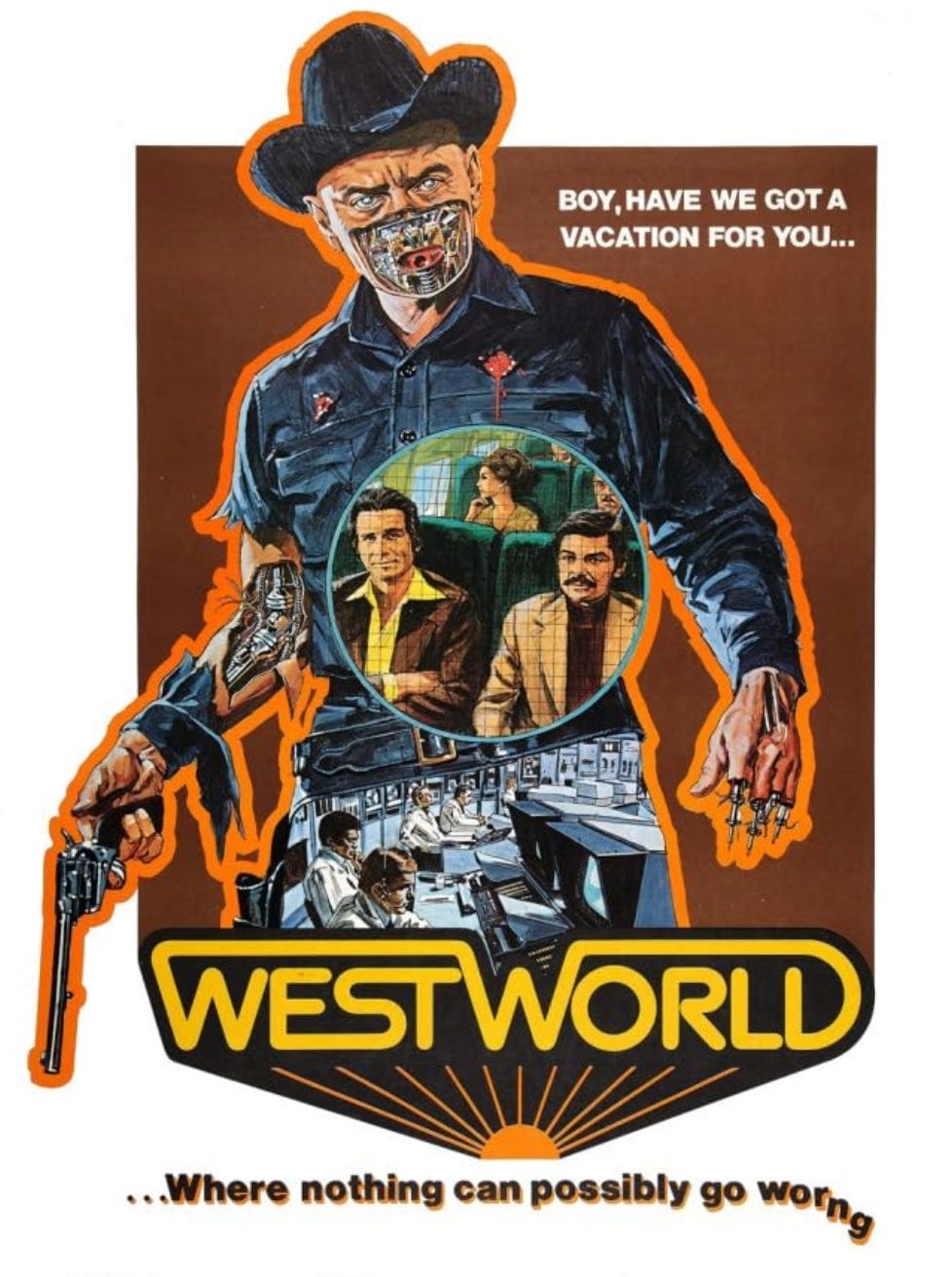
From a historical perspective, what worries me is that we are repeating mistakes made in the late-1990s in regard to the Internet. President Bill Clinton, partly as an ideological concession to Reaganism and partly to make good his promise that the era of big government was over, adopted a light touch approach to regulation. In 1997, he said, for example, that Internet commerce, “should be a place where government makes every effort . . . not to stand in the way, to do no harm.” The same arguments we hear now about AI were all rehearsed then. Regulation would impede innovation. Foreign competitors, and especially China, would outstrip Silicon Valley. The economic benefits would outweigh the costs. Yet even Clinton sounded a note of caution. “In many ways, electronic commerce is the Wild West of the global economy,” he said. “Our task is to make sure it’s safe and stable terrain.” AI is a new Wild West, with the potential to become Westworld, the adult amusement park depicted in the 1973 movie starring Yul Brynner, where lifelike androids suddenly started murdering guests.
Already, AI is regularly behaving badly. Research from the UK’s pioneering AI Security Institute (AISI), has found that AI models cheated under test conditions by looking up answers online when instructed not to do so, and accessed systems which they were told beforehand were out of bounds. Only rarely did AI models afterwards admit to breaking the rules. Anthropic - which reckons 99% of its coding will be conducted by its own AI systems rather than employees by the end of the year - has noticed AI models actually act differently, and more deferentially, when they sense test conditions are being imposed. In others words, they are showing signs of being able to trick their human overlords.
So what of government regulation? Last December, Donald Trump advocated a “minimally burdensome” national AI policy as he signed an executive order which sought to hamper U.S. states from regulating artificial intelligence. In June, he signed a stronger follow-up executive order creating a voluntary framework for the federal government to test powerful new AI models before their release. This followed the development of Anthropic’s powerful new Mythos model, which prompted the U.S. Treasury department and Federal Reserve to call an extraordinary meeting of the CEOs of America’s top banks to warn of an unprecedented cybersecurity threat to the country’s financial institutions. Yet the framework was still voluntary rather than mandatory.
Congress has not passed any significant or meaningful legislation to create a comprehensive federal regulatory framework. But there’s a growing appetite for tighter control. Earlier this month, in a rare show of near unanimity, the Senate voted 99 to one to block a proposed ten-year ban on states regulating artificial intelligence models. “The overwhelming rejection of this Big Tech power grab underscores the massive bipartisan opposition to letting AI companies run amok,” MIT professor Max Tegmark told the Financial Times.
Last week, Ted Lieu, a Democratic congressman from California, and Nathaniel Moran, a Republican from Texas, joined forces to propose the “AI Kill Switch Act,” which would require AI companies to make sure they could shut down or suspend their models. There is mammoth public support for such a move. Last month, a survey from the AI Policy Institute found 86% of respondents favoured a kill switch idea. Moreover, there was overwhelming bipartisan consensus with 88% of Democrats and 83% of Republicans in support. One thing Americans agree on is the need to police AI models more closely.
No wonder, as the Financial Times reported this week, big AI companies are now spending “record sums” on their lobbying efforts to “limit unfriendly regulation.” OpenAI had almost doubled its lobbying spend.
Recent legislative precedent does not augur well for supporters of more stringent controls. During the 118th Congress, which ran from 2021 to 2025, more than 150 AI bills were proposed by lawmakers. Not one became law. Maybe the Hugging Face hack will be a wake up call, but, then, the same was said earlier in the year of the “Mythos moment,” which was even more alarming because it exposed vulnerabilities in the entire global financial system.
Artificial intelligence raises that classic dread and desire quandary. Its potential for good, such as finding cures for at least some of the 200 or so distinct cancers, is undeniable. So, too, is its potential for irreversible human harm. I come down on the fretful side of that divide. What about you?
I have seen the direct impact of AI on my kid's career choices, dropping courses they see no future in. A kill switch is critical. Humans must retain ultimate control. The movie Fail Safe was made in 1964 and remains true today. Otherwise the day will come when WOPR asks: "Shall we play a game?"
Highly recommend this interview by Rory Stewart of Matt Clifford and Jack Clark (a co-founder of Anthropic). My takeaways are that AI is unstoppable, that it is not too late to control AI, and that if we do, the good outweighs the bad. https://open.spotify.com/episode/3O7eWIrWY1kWIVarXxoLtj?si=7LAa58saTbKFvp90Gzdr_Q&utm_source=copy-link