


I wrote this post a few months ago, when Keir Starmer faced his last leadership crisis, on the problem of drama addiction among both politicians and the political reporters who cover them. This malady fuels the constant cycle of chaos and uncertainty that is becoming so democratically destabilising. Boris Johnson won a landslide victory at the 2019 general election, with a majority of eighty seats, but did not manage to serve out his full term. Keir Starmer won an even bigger landslide in 2024, but did not even manage to check into the honeymoon suite, let alone pick up the bedside phone to order a glass of celebratory champagne. I have come to believe that the coverage of politics is contributing to the political crisis faced by so many mature democracies. We, as journalists, are a big part of the problem. There’s an excitability about so much of the coverage. Reporters are increasingly expected to conjecture what will happen next, and that creates a dynamic where prophecies need to become self-fulfilling. That shapes and, often, warps coverage - not just in the coming hours and days, but in the following weeks and months.
Yes, obviously, the reporting is based on facts. Voter discontent. Polls. Backbench disenchantment. Catastrophic results from the English local council and Scottish and Welsh parliamentary elections. And yes, Keir Starmer, as I wrote rather too cruelly two years ago, has “all the charisma of a packet of frozen peas.” But I think we have to ask ourselves, as an industry, are we contributing to a crisis of governance? Take a read, and tell me what you think. I have left the piece completely untouched.
Better story bias, I often call it. The tendency for journalists to compose storylines that comport with the narrative arc which delivers maximum journalistic entertainment value.
Needless to say, the most obvious example is the rise of Donald Trump in 2016 and his restoration in 2020. But there are others. In 2008, in the hive mind of the campaign press pack, the view took hold that the election of the country’s first African-American president was more compelling than the election of the country’s first female president, which helped him secure the Democratic presidential nomination. Epic history. Better story.
In 2000, George W. Bush offered greater narrative riches than Al Gore, who offered a continuation of the Clinton years without the personal recklessness of Bill Clinton. Even liberal-minded journalists often handicapped the race in the Texan’s favour by exaggerating the then Vice-president’s flaws.
Better story bias, though, does not solely involve pushing storylines that favour one candidate over another seeking office. More commonly, in this age of political turmoil, it involves heightening the sense of crisis engulfing unpopular incumbents facing potential ouster. This kind of frenetic reporting, driven also by the commercial necessities of clicks, ratings and views, has contributed to a political milieu in which Britain had six prime ministers in the space of eight years. Australia, during a similar phase of excitability, saw 8 prime ministerships in the space of fifteen years, after more than a decade when there was just one occupant of The Lodge, John Howard.
Britain served up another case study this week with the full ploughman’s feeding frenzy over the predicted demise of Sir Keir Starmer, when political reporters seemingly expected their prophecies to be made real by tea-time. From landslide in 2024 to lame duck in 2025 to dead duck in 2026. What a story.
Rather than performing the now familiar Downing Street ritual of appearing behind the prime ministerial lectern to deliver a teary valedictory, however, Starmer produced a desk-thumping address to Labour MPs which, in the space of an hour, transformed him from road kill into the “Comeback Kid”. For a couple of vital hours, his revival became a better story than his removal, which was enough time to save him. And by that, of course, I mean save him for now. This plot-line has not yet run its course. Since political correspondents have prophesied Starmer will go at some stage, there will be a temptation in tailoring their coverage to make that prophecy become self-fulfilling.

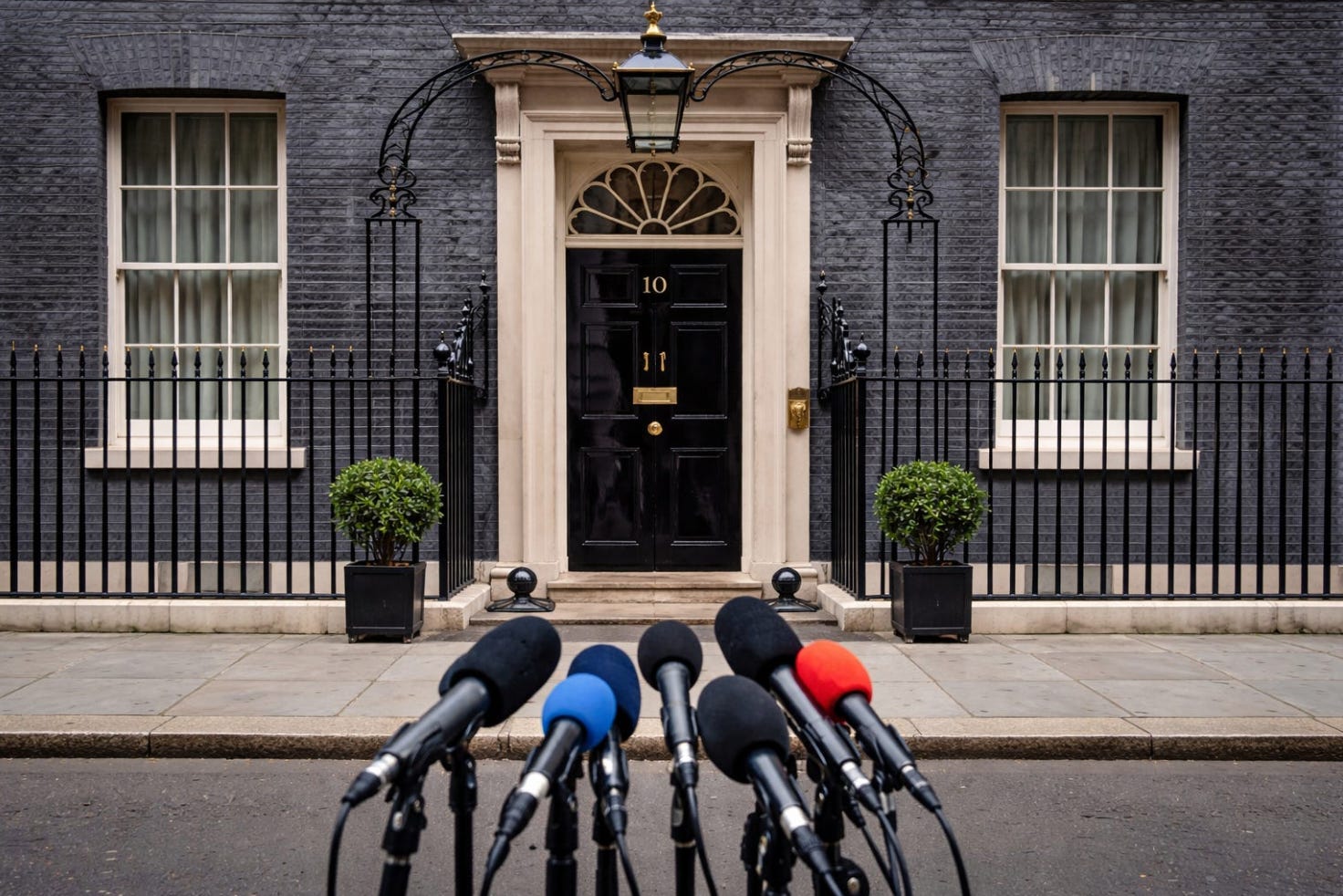
Prime Minister Sir Keir Starmer: still resident in 10 Downing Street.
The original story, that his prime ministership was in “deep peril”, was grounded in fact. Understandably, Starmer has faced an acid shower of criticism for appointing Peter Mandelson, a close friend of Jeffrey Epstein, as UK ambassador to Washington. His Downing Street chief of staff, Morgan McSweeney, quit at the weekend. Polls suggest he is the most unpopular Prime Minister since records began. Senior cabinet figures, such as Health Secretary Wes Streeting, are clearly plotting. But speculation of mass Cabinet resignations on Monday did not materialise. Calls from the leader of the Scottish Labour Party, Anas Sarwar, for Starmer to head off into the Islington sunset did not lead to an expected stampede.
The ouster of a prime minister is the highest form of entertainment that Westminster has to offer, a pantomime in which political reporters seem happy to play hammed-up roles. Or perhaps we should look on it more like the passion play at Oberammergau given the evident enthusiasm of the entire Westminster village to take part - although the Bavarian biblical blockbuster is staged just once every ten years.
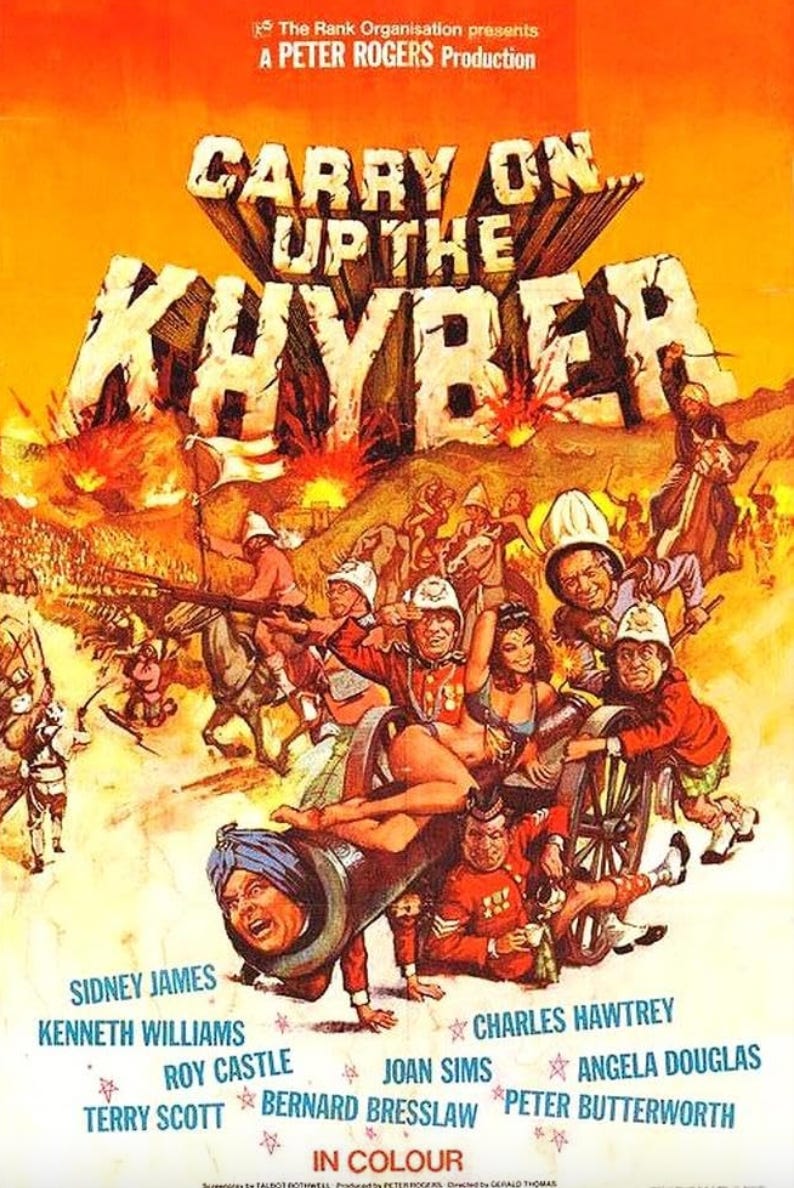
Certainly among political correspondents, there seems to be a fashion for acting out the news merely than just reporting it. True, all of us develop on-air personas and broadcasting voices that can veer towards the vaudevillian. In the early part of my career, I mimicked my BBC colleague, the much-admired former Hardtalk host Stephen Sackur so closely there were times when my “Stephen Sackur” rivalled his “Stephen Sackur”. Yet these kind of affectations seem especially de rigueur. Surely there is a doctoral dissertation waiting to be written on how, in an age of performative politicians, political reporting itself became performative. With all this overacting, no wonder British politics has become so melodramatic and histrionic. Part House of Cards, part West End farce, part Carry on up the Khyber.
Better story bias can be identified as a culprit in most major UK political events of the past decade. The replacement of Theresa May, a prime minister you could have on in the background, with Boris Johnson, who more than met the operatic requirements of our time. The demise of Boris Johnson and his replacement by Liz Truss. The lettucing of Truss, who did not even clock up 50 days in Downing Street, and the rise of her chirpy replacement Rishi Sunak, who benefited, on the narrative front, from being the country’s first prime minister of colour.
Then there is the big daddy of them all, Brexit. Leaving the European Union was always a better story for Westminster hacks than remaining, not least because it set up the fall of David Cameron as a plot-line and the rise, eventually, of Boris Johnson. Epic history. Better story.
Throughout the 2016 referendum campaign, the politics of Brexit - and the internal machinations of the Conservative Party - often received more attention than the economic implications of leaving the EU. “The press coverage focused heavily on a ‘game frame’,” concluded a study from the Reuters Institute for the Study of Journalism at Oxford University, “with a strong focus on the contest and the strategies and on politicians and campaign representatives with other voices, whether experts, academics, foreign politicians, or citizens, rather under-represented."
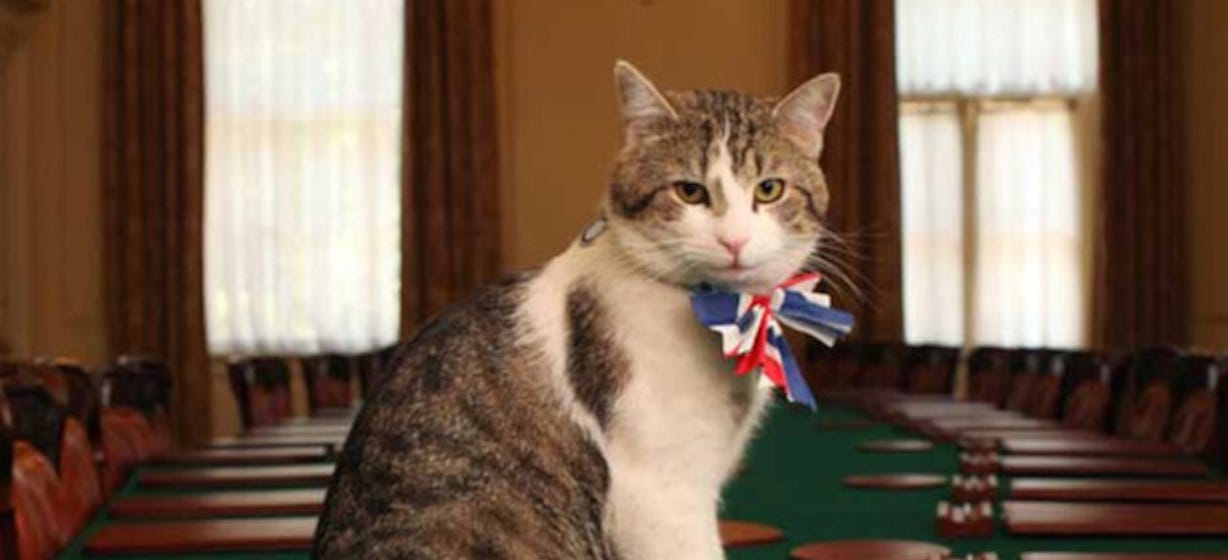
Larry the Cat: still resident in 10 Downing Street
As politics since Brexit has become more crazed and outlandish, the recurring problem for Sir Keir Starmer is that he lacks journalistic entertainment value. Political correspondents therefore require leadership speculation for entertainment.
Political showstoppers, in the Anglosphere especially, are dominating the stage. Trump, Nigel Farage and in Australia, right now, Pauline Hanson, whose One Nation party is outpolling the Liberal Party (which will hold a party room vote on Friday morning on whether to ditch its first female leader, Sussan Ley, who is not a strong media performer). Given the dramatis personae available for journalists to focus on, who wants a technocrat in a grey suit?
Last month in Davos, however, we saw a policy nerd shape-shift into a rock star, when the Canadian prime minister, Mark Carney, delivered a speech that was sober and level-headed but also searing in its analysis and viral in its reach. On the charisma front, Carney is no match for his predecessor Justin Trudeau, a pin-up of the international press. But in the almost decade he served as prime minister, I can barely remember a word Trudeau uttered.
All of the above should not be read as a blanket condemnation. A lot of political journalism is admirable. And, as I said, I have flicked the switch to vaudeville in breathlessly covering rip-roaring political stories. I cut my teeth in Washington during the Clinton years, for goodness sake, a particularly fast and furious time. But we as an industry we need to confront a hard truth: the excitable manner in which politics is now covered is contributing to our modern-day democratic malaise.
In Australia, after Canberra became the coup capital of the democratic world, a bloody phase that lasted from 2010 to 2018, things calmed down. Politicians and journalists both came to the realisation that the frenzy was unsustainable, at least when it came to ousting prime ministers. Westminster has not yet reached that point.
Maybe this week will have a subduing effect. Perhaps the reporting will become less excitable. Might I suggest a modified version of British tea towel wisdom. Keep calm and stop the “Carry on.” We are journalists, after all, not dramatists.
Part of Biden's problem was his presidency was boring compared to the first Trump presidency. The breathless political reporting dropped off and became mundane. It's safe to say, the breathless journalism picked up again
And as we can see Australia does indeed have another leadership spill on its hands. Sometimes I feel that between the invented daily Sydney crime capital stories run by the Daily Telegraph and the high quality of living in OZ that journalists just get plain bored and drumming up a so-called leadership challenge over a 1 or 2 year period provides the fix they need! Aided of course by an inward looking political class ( with some exceptions).... Your book on Australia is as relevant as ever.